Kamis, 25 September 2008

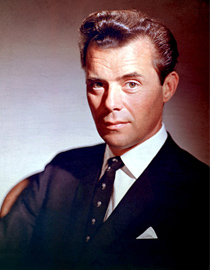
Introducing the Second Annual Dirk-Fest

Apologies (again) for the dearth of new material. Redecorating and a weekend-long tussle with the hedge (not been trimmed in almost a year; starting to look like an out-take from 'Day of the Triffids') have kept me ungainfully occupied. My few scraps of spare time, it has to be admitted, have been spent reading rather than movie-going.

In particular, I've immersed myself in 'Ever, Dirk', a volume of Dirk Bogarde's correspondence edited by John Coldstream, the author of a superlative biography of Bogarde published a few years ago.

Bogarde's seven volumes of autobiography, while elegant and sumptuously readable, are pretty much an act of obfuscation on his part. An earlier volume of letters, 'A Particular Friendship', published in his lifetime, was - how shall we say? - selective. 'Ever, Dirk' provides an interesting counterpoint to these works and functions, with a few references back to Coldstream's book for purposes of clarification, as the closest Bogarde ever came to a completely unfettered autobiographical account.

By turns waspish, witty, generous and judgemental, the letters reveal Bogarde as multi-faceted, changeable, controversial (anyone with an abiding sense of political correctness would be advised to steer clear) and complicated. In other words, human.

His deplorable grasp of spelling and total non-conformism in the face of grammar (his published works were professionally retyped with an eye to eradicating these offences) grate for the first few pages, but soon provide a pleasing sense of idiosyncracy. It's as if the imperfections put the reader closer to the real Bogarde.

'Ever, Dirk' is a fascinating and, in its closing pages, profoundly poignant book. Accordingly, the next week or so will be given over to The Second Annual Dirk-Fest, kicking off with one of his most controversial appearances ...

Rabu, 17 September 2008

Savage Grace

A week or so ago, me and Paula were invited for a meal by our friend Viv, with the suggestion that we then take in a post-prandial movie. Nothing at the multiplex grabbed our attention (I had a yen to see ‘The Duchess’, but neither Paula nor Viv like costume dramas) and we were of divided opinion on the films showing at the Broadway.

So we turned our attention to the Screen Room – officially the smallest cinema in the world (it’s as cosy and intimate as watched a professionally projected movie in your living room; their concessions stand even offers coffee and cake). They were showing ‘Savage Grace’. Beyond the fact that it starred the always-watchable Julianne Moore and was based on a true story, none of us knew much about the film.

So it was that we toddled off to see ‘Savage Grace’. Since Viv had cooked for us, I did the honourable thing, pulled out my ‘Pulp Fiction’-stylee BAD MOTHERFUCKER wallet, and stumped up for the tickets.

Early scenes were low-key and talky; the film opened out cinematically in its middle section (it’s structured in six ‘chapters’ covering different periods of time and geographical locations as its protagonists waltz through four decades of dysfunctionalism), then returned to dull interiors in its closing stages. It was waspishly scripted, powerfully acted and anaemically directed. There wasn’t a single character you could motivate yourself actually to give a damn about.

But, in parts, it proved curiously gripping. And then. About an hour and a half in …

SPOILER ALERT

… emotionally unstable socialite Barbara Baekeland (Moore), crosses the line in terms of maternal affection with her sexually confused son Tony (Eddie Redmayne) and some Oedipal shenanigans ensue. When sonny-boy informs mommy-dearest that, ahem, he didn’t reach completion, she finishes the job with a bit of the old five-fingered widow.

SPOILERS END

Imagine the three of us sitting there: Viv was staring at the screen in shocked silence, Paula’s head was in her hands and I’d suddenly taken a profound interest in my shoelaces.

A little later, after …

BUGGER ME, IT’S ANOTHER SPOILER ALERT

… sonny-boy stabs mommy-dearest with a kitchen knife during an argument then makes two phone calls, one for an ambulance, one to order a Chinese (the meal arrives before the ambulance: I have got to get the number of that takeaway!) …

SPOILERS END

… we wandered out into a particularly rainy night and compared notes. “That’s an hour and a half of my life I won’t have again,” Paula opined. My opinion was that ‘Savage Grace’ should have been a French or Italian movie from the 70s, subtitled and angst-y, the kind of movie you could tut over as you left the cinema, shaking your head and coming out with something like “Honestly, those Europeans …”

Viv’s final word was succinct and priceless. “You know what it says on your wallet,” she said; “well, now you’ve actually seen one.”

Minggu, 14 September 2008

Tremors

The satirical horror movie has proved as popular, in recent years, as the horror movie proper. With franchise reboots for ‘Texas Chain Saw Massacre’ and ‘The Hills Have Eyes’ and a new franchise courtesy of the ‘Saw’ movies, there have been any number of ironic repasts, from the subversively satirical ‘Severance’ to the out-and-out spoofery of the ‘Scary Movie’ quartet.

But before any of these, before ‘Black Sheep’ or ‘Dog Soldiers’, before ‘Eight Legged Freaks’, there was ‘Tremors’. And ‘Tremors’ did it better than any of its successors. And definitely better than any of its sequels.

Let’s draw a discreet veil over its sequels. And its prequel.

‘Tremors’ is a knowing, playful, but – when it matters – impressively suspenseful throwback to the “creature features” of the 1950s. It boasts a smart script with plentiful sharp dialogue (“we use forward planning – that way we don’t have to do anything right now”), a terrific double act in Kevin Bacon and Fred Ward, an effectively offbeat supporting role for C&W megastar Reba McEntire (who also provides the toe-tapping end credits song) as a gun-toting survivalist, and pacy direction from Ron Underwood that makes the best use of the Nevada setting.

The film opens with casual labourers Earl (Ward) and Valentine (Bacon) vowing to leave the small town of Perfection (a place that could be described as ‘backwater’ except that it’s a desert) when their situation – by dint of a succession of shitty jobs, quite literally in the case of a nasty encounter with a septic tank – becomes untenable. Only fate is working against them. Within the first quarter of the film, they make three attempts to leave the facetiously named Perfection, but are forced to turn back each time, Valentine opining the occurrence of divine intervention when a rockfall proves the last straw.

Already the movie is whole lot better than it has any right to be, because of the economy with which Underwood establishes his protagonists, their razor-sharp repartee and – more so – because Earl and Valentine are Everyman personified. Anyone who has held down a crap job, bemoaned their lot in life and/or wished for something better will recognise in them kindred spirits. The fact that things proceed to get a whole lot worse, thanks entirely to the ministrations of a bunch of subterranean monsters, just seems perfectly in keeping with Earl and Valentine’s talent for misfortune.

Ah, the monsters. I don’t know why – it probably says something about the weird workings of my mind – but I can’t help thinking that if the spice worms from ‘Dune’ hung out with the hillbillies from ‘Deliverance’, necked a little moonshine and spent a few generations breeding with their sisters, the big ugly wormy things in ‘Tremors’ are pretty much what the result would be. Their grotesqueness is almost comical, and this epitomises ‘Tremors’ nicely.

The film is tense in the right places (the worms’ attack on a couple out camping is a brilliantly sustained set piece) and gooey in the right places (don’t watch it over dinner), with a sardonic sense of dark humour overarching the whole thing. It set Underwood up to direct ‘City Slickers’ the following year, though sadly he’s done nothing of note since, and it still remains arguably the best film of its kind.

Selasa, 09 September 2008

PERSONAL FAVES: Seven Days to Noon

Professor Willingdon (Barry Jones), in London for a political protest, sees a picture of himself in the paper. It is a picture that will soon be displayed on hoarding-sized posters throughout the city, posters bearing the stark legend ‘THIS IS THE MAN WE WANT’. Realising his moustache is his most identifiable feature, Willingdon hastens to a barber’s. Emerging, one close shave later (he’ll have close shaves of an entirely different variety later), he pauses to get his bearings, then heads off past an undertaker’s. A sign in the window of this grim establishment reads ‘FUNERALS AT GOVERNMENT PRICES’.

Willingdon is wanted by the police. His letter to the Prime Minister (Ronald Adam), demanding Britain’s immediate cessation of atomic weapons manufacture is bad enough. That he has been part of the very research team dedicated to creating them is worse. The really unforgivable sin, however, is his appropriation of the one of the devices – which he intends to detonate in Greater London, destroying a twelve-mile radius of the capital, if the PM doesn’t publicly commit to disarmament.

CID bod Inspect Folland (Andre Morrell) finds himself heading up the manhunt. Folland enlists the help of Willingdon’s research assistant, Hugh Cross (Steve Lane) – a man already professionally compromised through his relationship with Willingdon’s daughter Ann (Sheila Manahan) – but their efforts bear little fruit. A brief sighting of the professor ends in his escape. A call from his suspicious landlady (a terrific Joan Hickson, a TV star in later life headlining the ‘Miss Marple’ adaptations) results in a heavy-handed police presence: Willingdon quietly slips away and finds lodgings with faded middle-aged ‘showgirl’ Goldie (Olive Sloane).

With the clock ticking and police activity yielding nothing (a search of a bathhouse, a walrus-moustached overweight man blustering impotently, waspishly satirises the opening sequence of Powell & Pressburger’s ‘The Life and Death of Colonel Blimp’), the military are called in. Plans for the evacuation of London are put into action. Two railway workers paste destination numbers onto carriages – “Remember last time we did this?” one of them asks. “It was Dunkirk.”

Dunkirk is referenced more than once in the film. Wartime imagery is everywhere (the Powell & Pressburger send-up is apposite: this is an England far removed from the bucolic idylls of The Archers; an England, in fact, which is as dangerous as any other country that has access to atomic weaponry): soldiers search a deserted city, going house-to-house; Willingdon shelters in an abandoned church, a sign outside soliciting donations towards its rebuilding (‘BLITZED TEN YEARS AGO’); a looter is gunned down without a word of warning; a station platform stands empty apart from a sign reading ‘ALL ANIMALS TO BE LEFT HERE’ and, beneath it, a menagerie of now-ownerless pets, mewling and whining and barking as they pace their cages.

‘Seven Days to Noon’ was made in 1950.

Let me repeat that. ‘Seven Days to Noon’ – with its anti-atomic weaponry message, its scenes of evacuation, its threat to the nation’s capital, its unheroic soldiers (one paws through someone’s underwear drawer, stealing a pair of knickers; another raids a wine cellar; all complain about their duty to king and country) – was made just five years after the end of the war.

I can only imagine what it would have been like to see the film on its original release – particularly at a cinema in London. I imagine it was like having a couple of hundred volts applied to a still open wound (bomb sites would scar London for two decades after Nazi Germany’s surrender), the too-real nightmares of only a few years ago howling back at you from the cinema screen.

John and Roy Boulting’s film is perhaps the riskiest choice in a career which pretty much baited controversy. ‘Brighton Rock’, only John’s second film as director, was film noir writ as brutal and unflinchingly as anything America produced; their string of acerbic satires – ‘Private’s Progress’, ‘Lucky Jim’, ‘I’m All Right Jack’ (to the best of my knowledge, the only film to make a villain of the fork lift truck) and ‘Heavens Above’ – stick it to the military, academia, trade unionism and the church respectively.

In the pantheon of great partnerships from the golden age of British film-making, Powell & Pressburger melded a nostalgic Home Counties mindset with a distinctly European aesthetic (sometimes successfully, sometimes awkwardly), while Launder & Gilliat sneaked a sly subversiveness under the radar of populist entertainment. The Boulting Brothers, however, squared off against the realities of post-war life in a less-than-Great Britain. Mostly, they used the comforting buffer of (albeit razor-sharp) comedy. In ‘Seven Days to Noon’ – a film without heroes or villains – the gloves came off: not only were they were serious, not only did they ask some big questions, but they created a bloody good thriller that – despite its occasionally dated moments – comes across, and does so emphatically with repeated viewings, as years ahead of its time.

Jumat, 05 September 2008

Loafing oafs in all-night chemists ...

This from telegraph.co.uk:

It seems like sacrilege, but the director and writer Rowan Joffé tells Mandrake that he is to remake John Boulting's classic film Brighton Rock with an emphasis on knife crime.

"With the recent spate of stabbings, Graham Greene's tale about a murderous 17-year-old clearly still has something to tell us about the world we live in," he says.

Joffé, the son of Roland Joffé, who directed The Killing Fields, is seeking the blessing of Lord Attenborough, who starred as the gang leader Pinky in the 1947 film.

"I will be showing him a finished version of the script," he says. "Fingers crossed he will be supportive – his praise would mean a hell of a lot."

Excuse me? “With an emphasis on knife crime?” And what exactly did Pinky use in the original, a fucking pencil sharpener?

Rabu, 03 September 2008

Summer of the superhero (2): Hellboy II and The Dark Knight

So, my two most anticipated films of the year have come and gone, both sequels, both saddled with the challenge of facing up to an awesome first instalment, both reuniting director and key players, both with the potential for greatness.

One was masterful, one disappointing. Let’s get the disappointment out of the way first.

A few weeks before it opened, I mentioned to a friend that I was eagerly anticipating ‘Hellboy II: the Golden Army’. His response was a cautious, “Might just be more of the same, though.”

Oh, that it had have been! The original ‘Hellboy’ was a delight: it came out of nowhere, unheralded, the brainchild of Guillermo del Toro, a man who had made a career out of alternating highly personal Spanish-language films (‘Cronos’ – what a debut!) with generic Hollywood productions … a ‘one for you, one for me’ arrangement that seemed to serve him well. Only with ‘Hellboy’, it was more a case of ‘one for me while I pretend it’s one for you’. Studio film-making shot through with a style all of his own. And I dug it big time.

I dug ‘Pan’s Labyrinth’ a whole lot more – it’s on the personal faves list and I’m itching for it to get pulled out of the hat (a certain revisionist Boulting Brothers classic is next on the list) – and was in a state of almost pant-wetting excitement at the prospect of a ‘Hellboy’ sequel.

Ordinarily, this would be the point where I’d come out with an eminently sarcastic paragraph consisting of a single sentence where every component word is full stopped, just to ram the message home as bluntly as possible. Something like:

But. It. All. Went. Wrong.

I can’t quite bring myself to grind the axe so viciously with ‘Hellboy II’, though. Whatever its deficiencies (see next few paragraphs), it is nothing less than visually magnificent. The troll market sequence is a standout, likewise an extended sequence involving a forest elemental; although seemingly vindictive to begin with, once defeated by Hellboy, it dies the most poetic of all movie deaths, turning a grimy city sidewalk into a pastoral glade. Likewise, del Toro’s take on the angel of death: a deliciously ambivalent creation on every level.

Del Toro’s imagination gets free rein when it comes to the creatures and visuals, and he exploits it in to the full. Oh, that the same degree of imagination, of artistic flair had been lavished on the script. For the script is the albatross around the film’s neck, the millstone forcing it to shuffle when it should sprint, leap, fly …

The original succeeded because of its script, its direction and its cast. All elements lined up and clicked into place. The sequel fails because it takes the intelligent characterisations of its predecessor and dumbs them down. Remember the lovelorn Hellboy (Ron Perlman), worshipping Liz Sherman (Selma Blair) from afar, taking advance on matters of the heart from a nine-year-old kid? A wonderful, perfectly played scene. In the sequel, Hellboy and Liz are a couple and their constant bickering is on par with the last, desperately unfunny, series of ‘Men Behaving Badly’.

Or how about Manning (Jeffrey Tambor), Hellboy’s nominal departmental nemesis: originally a stuffed shirt who later proves his mettle and earns Hellboy’s grudging respect. Here, he’s reduced to a stuttering imbecile paraded in front of the audience for cheap laughs. Liz Sherman’s erstwhile edgy, unpredictable heroine is recast as a doe-eyed sap. Doug Jones as Abe Sapien – a cool, intelligent foil to Hellboy first time round, is forced into a lapdog-like romantic subplot and saddled with dimestore motivation purely to drive the plot forward in the final act.

Yeah, ‘Hellboy II’ is a glory to behold imagery-wise, but its nothing short of a betrayal of everything that made the first film so priceless.

Fortunately, Christopher Nolan doesn’t make the same mistakes in ‘The Dark Knight’. In fact, he doesn’t make any mistakes at all. ‘The Dark Knight’ is not only an improvement on the frankly fucking bloody brilliant ‘Batman Begins’, and not only the best film of the summer, but it’s one of the best films of the year, period.*

I’m aware that I’ve just spent about 600 words bemoaning ‘Hellboy II’ and I could easily knock out twice that many praising ‘The Dark Knight’ to the heavens, but before this posting gets too long, and too reliant upon strings of fanboy-grasped adjectives, I’ll just pick out just four aspects of the film at random and hopefully, if there’s anyone within a hundred miles of a cinema who hasn’t seen it yet, said individual will log off this blog and head for the multiplex in question PDQ:

1) Heath Ledger as The Joker. Christ, I feel his loss so badly watching this film. The Joker is quite simply his greatest performance. It telegraphs the career he would – should – have gone on to. Like Malcolm McDowell in ‘A Clockwork Orange’, Ledger tears down the screen, eradicates the boundary between actor and audience, and makes every fucking one of us complicit in his gouts of inspired mayhem.

2) Christian Bale as Batman. Going deeper and darker into Bruce Wayne’s psyche, his balls-to-the-wall acting style creating an even more emphatic schism between the two personalities, Bale takes a comic book (anti) hero and turns him into a mainstream Hamlet. I can’t think of any other blockbusting, studio produced summer event movie that delves with such Shakespeare fearlessness into the compromised morality of its ostensible hero.

3) The supporting cast: Michael Caine, making it a quadruple-whammy after ‘Batman Begins’, ‘Children of Men’ and ‘The Prestige’, doing some of the best work of his career; Morgan Freeman, the Mister Cool of cinema, who – as Antagony & Ecstacy has pointed out – claims the single best line of the film; Gary Oldman, building on the rugged humanity of Lieutenant Gordon in the first film, here developing the character to heights of almost tragic intensity; and Aaron Eckhart as Harvey Dent/Two Face, the only complaint about whom is that, with The Joker taking centre stage, he doesn’t survive to become the antagonist of a third instalment – Eckhart’s performance would easily have driven another movie.

4) The co-writer and director, Christopher Nolan, who, six films into his career has yet to deliver a film that is less than fascinating, and half of whose filmography – in my opinion – constitutes bona fide masterpieces. For what he’s done so far: slainte, Mr Nolan. For what he has the potential to go on to do: I can’t fucking wait!


*To qualify this remark, two of the US critics’ best films of ’07 – ‘No Country for Old Men’ and ‘There Will Be Blood’ – didn’t open in the UK till January and February of this year respectively.
Senin, 01 September 2008

An ideal husband

Another Oscar Wilde adaptation? No, just my mission statement now that Paula has made an honest man of me.

We honeymooned in Scotland, staying in an idyllic little village called Drumnadrochit, on the shores of Loch Ness. If you're ever in the vicinity, I highly recommend an evening meal at Fiddler's restaurant, followed by a sampling from their exquisite collection of single malts.

Subject of which, distilleries were visited, drams partaken of, and bottles procured. We are now officially skint, but there are some things money can't buy.

One of the things it can, however, is the Cineworld Unlimited card, and I must confess I've not been putting mine to proper use. I've seen exactly one film on the big screen in the last fortnight - of which more next posting - and barely more than that on the small screen.

But I'm back, and the financial imperative of spending a good few weeks watching the pennies means that plenty of DVD viewing is on the cards, the Bond-fest over at Guilty Pleasures will resume, and I'll be catching up on a few of the personal faves here on The Agitation of the Mind.

It's good to be back.

(For the record, that's confetti on my head, not bird poo. Honest.)