Tampilkan postingan dengan label giallo. Tampilkan semua postingan

Selasa, 20 April 2010

Baba Yaga

Posted as part of Operation 101010
Catgeory: gialli / In category: 4 of 10 / Overall: 25 of 100
Corrado Farina’s ‘Baba Yaga’ is one of those films I’d been vaguely aware of without knowing anything much about it. I came across it having fed “giallo” into the search facility while updating my rental list recently. But is it a giallo? The first time I ever wrote about gialli on this blog, I prefaced the review with a brief checklist: a guide to recognising your giallo. It tapped out at ten items:

1. Black gloves. The must-have fashion accessory for the killer-about-town.

2. An amateur sleuth, in the wrong place at the wrong time, who decides to launch their own investigation after witnessing a murder or attempted murder.

3. Totally ineffectual police officers.

4. Extended, operatic death scenes which present as a hybrid of the traditional whodunit and the visceral stalk ‘n’ slash flick.

5. Staircases, often spiral. Likewise, killers and victims alike tend to plunge from high places or down elevator shafts.

6. J&B. Product placement as blatant as Aston Martins in Bond movies.

7. Famous mainstream actors at the start or later on in their careers.

8. Gratuitous nudity. (Well, black gloves and bottles of J&B can only generate so many ticket sales.)

9. Edwige Fenech.

10. Distinctive titles, often featuring an animal (‘Don’t Torture a Duckling’), a colour (‘Deep Red’), a number (‘Five Dolls for an August Moon’), or sometimes a combination of all three (‘Four Flies on Grey Velvet’).

Add to this an occasional tendency to incorporate supernatural elements, and let’s run ‘Baba Yaga’ against the checklist. It scores a big fat no on points 1, 5, 9 and 10. Point 2 is a maybe – the main character, adrift in a welter of weird shit, latches onto a hitherto overlooked detail (a quintessential giallo trope) which helps her unravel things. Likewise point 3 – some cops turn up at the end and do precisely fuck all, but their abortive attempts at sleuthing are never established in counterpoint to the amateur detective’s efforts as in the best gialli.

Point 4, half and half – there are some extended, operative (hell, positively grand guignol) dream sequences that presage a couple of swiftly portrayed, almost throwaway death scenes.

As for the rest of them: point 6 (didn’t notice, and the supremely authoritative Atrocity Nights J&B in the movies page doesn’t list ‘Baba Yaga’, so I’m guessing not); point 7 (check: Carroll Baker); and point 8 (very little nudity per se, but sleaze aplenty).

So it’s a very shallow case for ‘Baba Yaga’ as a giallo. But fuck it, it’s my blog and I’ve still got 75 movies to get through to finish this Operation 101010 project so I’m taking the minority view and deciding to allow it.

The film centres around photographer Valentina (Isabelle de Funes). When we first meet her she’s attending some kind of weird performance theatre piece in a graveyard. The police break it up and she adjourns to a society party. Later she hangs out with some sexy Marxists who talk up revolution. In the course of the film she gets involved with director Arno Treves (George Eastman); one moment he’s making a documentary attacking capitalists, the next he’s shooting a commercial for washing powder. The politics of ‘Baba Yaga’ are, to put it mildly, slightly confused.

Treves’s washing powder commercial, incidentally, is horribly racist. It anthropomorphosises a black man in a black suit as a stain and a white man in a white suit as the detergent. Whether Farina meant this ironically, I’m not sure. But it’s something of a slap in the face to the viewer. It doesn’t help, either, that an air of homophobia permeates ‘Baba Yaga’, in the shape of its eponymous anti-heroine.

Baba Yaga is a witch and a lesbian. Farina seems to have less of an issue with the whole witch aspect. Long story short: B.Y. almost runs Valentina over as she walks home from the society party, offers her a lift, and tells her they were destined to meet. She takes a clip from Valentina’s garter and promises to drop by to see her the next day. Valentina flees to her apartment where she has the first of several surreal dreams that, depending on how your look at it, (a) tap into her sexual repression, (b) feature fetishistic use of German uniforms (from both wars), (c) make no fucking sense, or (d) all of the above.

B.Y. comes calling, as promised, the next day and puts a spell on Valentina’s camera. Doing an erotic shoot with a model dressed in a revealing cowgirl outfit, the poor unfortunate collapses as if shot by the very replica pistol she’s holding.

Later, Valentina photographs a protestor at a demonstration and the guy drops dead. Valentina hits upon a self-evident solution: use a different camera. This doesn’t, however, stop her from visiting B.Y. on the pretext of using her decrepit old house as a backdrop to a photoshoot. B.Y. gives her a doll called Annette. The doll is done up in bondage gear.

At another erotic shoot, the model is stabbed during a power cut and later dies. Valentina and Treves develop the film from the possessed camera and the resultant pictures indicate that Annette (Ely Galleani) has come to life and offed said model.

(I am not making this up.)

Annette appears to Valentina, almost seduces her, then departs.

A phone call summons her to chez B.Y. Now completely under the witch’s spell, she goes. After ten minutes’ worth of kink (bondage, whipping and a quick grope), Treves turns up to save her from the proverbial fate worse than death.

Which is where I have issues with the film. Farina obviously revels in the faux sapphic imagery and yet comes across as puritanical in his denunciation of Baba Yaga as a manipulative and evil seductress. However, all of the dream sequences seem to indicate that Valentina is drawn to B.Y. I can’t help thinking that a more interesting (and certainly more erotic) film could have been wrought from the concept of Baba Yaga as Valentina’s liberator. Likewise, I’m also stumped as to why the supposedly omnipotent B.Y. wastes so much time and effort on the androgynous and unresponsive Valentina when she has the voluptuous and sexed-up Annette at her disposal. Without wishing to veer into the realms of chauvinism, laddishness and objectification, let me put it this way – Valentina or Annette, your choice:

Ahem. Moving swiftly on:

‘Baba Yaga’ is homophobic, racist and deeply confused in roughly equal measures. And it’s probably not even a giallo. The Shameless DVD release that I watched purports to be Farina’s final cut, restored from the butchering the erstwhile distributors enforced upon it. I’ve never seen said bastardised version, but if the director’s cut is this schizophrenic, I’d hate to imagine how fucked up the theatrical release was.

Rabu, 24 Maret 2010

The Black Belly of the Tarantula

Posted as part of Operation 101010
Category:
gialli / In category: 3 of 10 / Overall: 21 of 100


Let’s run Paolo Cavara’s 1971 opus against a quick giallo checklist:

A title featuring some combination of a colour, a number or an animal – ‘The Black Belly of the Tarantula’. Two out of three. Check!

A quasi-scientific conceit that gives the film its funky title (in this case, an arachnid-derived nerve serum that permits the killer to … well, I’ll you find that one out for yourselves). Check!

Equally stylish cinematography/compositions and a tendency to architecture porn. Check!

An androgynous killer whose sartorial tastes run to trenchcoat, fedora and gloves. Check!

Bottles of J&B all over the shop. Check!

A roof-top chase. Check!

A scene involving one of those old-fashioned cage-style elevators with a stairwell built around it. Check!

Hyper-stylised death scenes in locations which include a room full of tailor’s dummies and a photographer’s studio. Check!

Eye candy a-go-go. Barbara Bouchet, Claudine Auger, Rosella Falk, Annabella Incontrera, Barbara Bach and Stefania Sandrelli. Check, check, check, giggety-giggety, alriiiiiiight!

An almost arbitrary ending where the killer’s identity and motivation are explained away with a bit of psychological mumbo-jumbo. Check!

Let’s face it, ladies and gentlemen, all ‘The Black Belly of the Tarantula’ lacks is a comically incompetent cop and an appearance by Edwige Fenech. On paper, you can see why the Blue Underground Region 1 DVD release is emblazoned with a quote from Horrorview declaring it “the best giallo ever made”.

A bold claim. There are plenty of contenders for the “best giallo” crown: Mario Bava’s ‘The Girl Who Knew Too Much’ (pretty much the original giallo), ‘A Bay of Blood’ or ‘Five Dolls for an August Moon’; Dario Argento’s ‘Deep Red’, ‘Tenebrae’ or ‘Opera’; any of the Sergio Martino psycho-sexual thrillers starring the aforementioned Ms Fenech; Lucio Fulci’s ‘A Lizard in a Woman’s Skin’, ‘Don’t Torture a Duckling’ or ‘Murder to the Tune of Seven Black Notes’; Pupi Avati’s ‘The House with the Laughing Windows’ … let’s face it, as a genre (hell, even a sub-genre), the giallo boasts more great examples than not. So: does ‘The Black Belly of the Tarantula’ live up to the hype?

Hmmmmm. Not sure.

Let’s look at the two things missing from that checklist. Ladies first: Edwige Fenech. Ah, well. Can’t be helped. Besides, ‘TBBotT’ does feature – albeit briefly – the knee-weakeningly alluring Barbara Bouchet. We’ll let it slide.

Which leaves us with the absence of that giallo staple, the comically incompetent cop. While our hero Inspector Tellini (Giancarlo Giannini) is an officer of the law, he has more in common with Stanley Baker’s Inspector Corvin in ‘A Lizard in a Woman’s Skin’ than, say, Inspector Morosini (Enrico Maria Salerno) in ‘The Bird with the Crystal Plumage’. Tellini works the case, uncovering a blackmail plot and a highly imaginative cover for drug smuggling as he closes in on the killer, never mind a red herring designed to embarrass him in front of his superiors, an attempt on his life and the exposure to danger of his wife.

Also like Stanley Baker, Giannini is an actor better known for his non-giallo roles than his work within the genre. Probably best known to mainstream audiences as the ill-fated Inspector Pazzi in ‘Hannibal’ and Rene Mathis in ‘Casino Royale’ and ‘Quantum of Solace’, Giannini earned a Best Actor nomination at the 1977 Oscars for his role in Lina Wertmuller’s ‘Seven Beauties’ and has won Cannes, David di Donatello, Silver Ribbon, Flaiano International and any number of other US and European festival awards.

While his performance in ‘TBBotT’ is not quite as awards-worthy as his work elsewhere (although it was only a year later that he won his first David award), Giannini delivers a restrained, understated, brooding characterisation, establishing Tellini as a man who is painfully aware that his job is beginning to define him and is disconcerted by the implications. Having said that, his self-evident conflictions between career and personal life owes as much to the casting of the lovely and effervescent Stefania Sandrelli as Signora Tellini.

And herein lies the essential dichotomy of ‘TBBotT’. For all that it ticks the majority of giallo boxes, the film is atypical in many ways. For all that it delivers some graphic murders with gleefully exploitative relish, its overall aesthetic is low-key and frequently downbeat. For all that the denouement trades on pulpy psychology, the 90 minutes that precede it are a study in slow-burn procedural narrative.

For much of its running time, ‘TBBotT’ unfolds in a mannered and rather austere style (short of Tellini demonstrating an affinity for Wagner and real ale, you could almost mistake it for an episode of ‘Inspector Morse’). And yet the sexualised representation of violence, the intermittent lurches into expressionistic camerawork and the omnipresence of giallo touchstones seek to remind the audience what they paid for.

All of which left me confused as to whether I was watching a deliberately-slumming-it art movie or a thinking man’s exploitationer. ‘TBBofT’, entertaining as it is, never fully reconciles these polarities, and although I’d cautiously recommend the film, it falls short of greatness for precisely this reason.

Rabu, 17 Februari 2010

Blood Stained Shadow

Posted as part of Operation 101010
Category: gialli / In category: 2 of 10 / Overall: 13 of 100


‘Blood Stained Shadow’ was the second of two gialli directed by Antonio Bido, following ‘The Cat’s Victims’ (a.k.a. ‘Watch Me When I Kill’) and represents a quantum leap from its predecessor’s staid pacing and uninvolving mystery. Set – like Aldo Lado’s ‘Who Saw Her Die?’ – in an almost permanently fog-enshrouded Venice, ‘Blood Stained Shadow’ exploits its setting to good effect and values atmosphere and tension above gore and grand guignol set pieces.

Academic Stephano d’Archangelo (Lino Capolicchio) returns to his native Venice for some R&R – and, having struck up a rapport on the train with attractive fellow passenger Sandra Sellani (Stefania Casini), maybe something more – but his arrival home is met with truculence from the locals, suspicious looks, and a reunion with his brother that is overshadowed by strange events which soon lead to murder.

Stephano’s brother, Don Paolo (Craig Hill), is a priest whose actions on behalf of his parishioners have brought him into conflict with Count Pedrazzi (Massimo Serrato), a suspected paedophile. Pedrazzi attends séances conducted by a medium (Alina de Simone) who is using information gleaned at these events for personal gain.

Don Paolo witnesses the medium’s murder one stormy night, but by the time he raises the alarm the killer has fled. In trying to raise the alarm, Don Paolo finds himself alone in the house, both his brother and the sacristan Gasparre (Attilio Duse) having inexplicably chosen this most inclement of evenings to take themselves out on errands. The following morning, Don Paolo receives an anonymous note warning him to keep quiet. Other notes follow, their contents increasingly threatening.

‘Blood Stained Shadow’ is a veritable blood stained fishpond, a shoal of red herrings darting across the screen at any given moment. Is it coincidence that Don Paolo’s misfortunes begin the moment Stephano arrives back on the scene? What’s the story behind Stephano’s never-fully-explained medical condition? Why are his “attacks” accompanied by flashbacks, and what are these flashbacks to? What’s the secret that connects the local doctor and a midwife who behaves suspiciously? Why is someone willing to kill for a painting by Sandra’s bed-ridden mother-in-law and what does the canvas symbolize?

Bido plays with genre tropes and expectations just as deftly as he plants/obfuscates the clues. There are roving POV shots, not always from the killer’s perspective. There’s a pounding Goblin-like score clearly inspired by ‘Deep Red’ (‘Blood Stained Shadow’ was made a year after Argento’s masterpiece) that doesn’t always mean a fatality when it kicks in. Stephano’s love of art recalls Capolicchio’s character in Pupi Avati’s ‘The House with the Laughing Windows’, while the importance of a painting is a giallo standard perhaps most famously exemplified by Argento’s ‘The Bird with the Crystal Plumage’.

There are a couple of week spots: Capolicchio’s performance is as plank-like an unemotive as it was in ‘The House with the Laughing Windows’, while Casini – an intriguing actress who’s worked with Argento, Marco Ferreri, Bernardo Bertolucci and Peter Greenaway – is wasted in a nothing role. On the plus side, Craig Hill is excellent, investing Don Paolo with gravitas.

The murder scenes, while secondary to Bido’s penchant for suspense and misdirection, are (pardon the pun) well executed, particularly an extended set piece featuring two boats and a hapless individual who finds himself plunged into the dank waters of a canal.

For a city that subsists almost entirely on tourism, a city so frequently cited as a romantic destination, cinema has done Venice few favours: it’s a place of decaying grandeur against which von Aschenbach dies in ‘Death in Venice’, an appropriately sorrowful backdrop to a psycho-sexual study of loss and impending violence in ‘Don’t Look Now’, a place in which one becomes both physically and emotionally lost in ‘The Comfort of Strangers’, and the stalking ground of black gloved killers in at least two gialli. See Venice and die.

Selasa, 26 Januari 2010

All the Colours of the Dark

Posted as part of Operation 101010
Category:
gialli / In category: 1 of 10 / Overall: 4 of 100


Check out the image above. Off-kilter composition, bottle of J&B, Edwige Fenech. Yup, we’re in giallo territory.

‘All the Colours of the Dark’ is one of five terrific gialli Sergio Martino directed between 1971 and 1973, following on from (and reuniting the stars of) ‘The Strange Vice of Mrs Wardh’ and the magnificently titled ‘Your Vice is a Locked Room and Only I Have the Key’.

Fenech stars as Jane Harrison, the increasingly harassed and distressed partner of London-based pharmaceutical rep Richard Steele (George Hilton). Still plagued with nightmares about the murder of her mother many years previously, Jane is also recovering from the trauma of a car accident (an incident for which it seems Richard is blameworthy) which caused the miscarriage of her baby. Richard favours prescription drugs to treat her nervous condition, while her sister Barbara (Nieves Navarro, appearing under her Susan Scott pseudonym) is keen for Jane to enter therapy with the psychiatrist for whom Barbara works.


To make matters worse, the piercingly blue-eyed killer from her dreams – a man with rather phallic tendencies to knife-wielding – seems to have stepped living and breathing into the real world. Jane’s already fragile condition deteriorates as he begins stalking her, following her on the Underground, keeping sinister vigil outside her apartment building.

Martino establishes a ‘Rosemary’s Baby’-style atmosphere of mounting dread from the outset, probing his heroine’s borderline hysterical mental/emotional state as effectively and unremittingly as Polanski did in his classic of the macabre. The influence of ‘Rosemary’s Baby’ is writ large, but it’s to Martino’s credit that ‘All the Colours of the Dark’ comes across as more than just a knock-off or a cash-in.

Martino gets the ball rolling with a zonked-out dream sequence structured around quasi-Freudian imagery that mirrors Jane’s state of mind. Many more dream/fantasy/paranoia sequences will follow, Martino segueing between Jane’s inner world and the (supposedly) real one with such sneaky aplomb that, for much of the film’s hour and a half running time, he maintains ambiguity as to whether everything we see is simply a product of Jane’s troubled mind. (Lucio Fulci achieved a similar effect, albeit using a different cinematic bag of tricks, in ‘A Lizard in a Woman’s Skin’ made the year before.)

If proof of Jane’s mental turmoil were required, it’s provided by the scene on which the film entire hinges. Panicked after a perhaps-real-perhaps-imagined appearance of the stalker, Jane seeks solace from her alluring but mysterious neighbour Mary Weil (Marina Malfatti).


Jane: I'm sure someone is chasing me, someone coming very deep from my childhood. Do you believe in that sort of thing?
Mary: I believe in a lot more .. I had my problems, too. Not as serious as yours, but I got rid of them.
Jane: How?
Mary: Do you know what a black mass is?
Jane: You're scaring me.
Mary: It makes sense to be afraid sometimes. You have to find it and it'll disappear.

At this point, ‘All the Colours of the Dark’ could easily have lurched into the realms of the risible, the carefully established atmosphere and giallo tropes swamped by this explicitly horror/supernatural-themed narrative development. And, it has to be admitted, Martino’s staging of the black mass/orgy does come close to parody. Bruno Nicolai’s wordless vocal score is unintentionally hilarious while actor Julian Ugarte’s portrayal of the cult leader is less high priest than high camp.

Yet somehow Martino manages to fuse the disparate elements into a decently-paced and never less than entertaining hybrid. He makes good, non-touristy use of the London locations and conjures as many striking compositions and memorable set-pieces as you’d expect from a giallo, culminating in a vertiginous rooftop chase.

Fenech turns in a full-throttle performance as a woman in meltdown. Navarro and Malfatti add to the glamour quotient, even if their performances prove somewhat by-the-numbers. Hilton is dependable, but badly dubbed in the English language version. (Subject of which: the Shriek Show DVD release, while presenting a beautiful anamorphic transfer, suffers from murky sound that renders entire chunks of dialogue nearly indecipherable; fortunately, an Italian language/English subtitles option is available.)

‘All the Colours of the Dark’ arguably stops short of being one of the all-time great gialli, though. It flags a little towards the end. The fantasy vs. reality riff is recycled perhaps once too often. The eleventh hour inclusion of an exposition-spouting police inspector is arbitrary even by giallo standards. A just-as-eleventh-hour subplot involving an unexpected inheritance threatens to steer the mystery from the esoteric to the mundane. More annoyingly, a flashback to a crucial but initially overlooked clue requires a cheat on Martino’s part.

Still, these are relatively minor gripes and gialli often rely on endings that are abrupt, arbitrary or outright baffling (even such richly atmospheric, slow-burn entries as ‘Who Saw Her Die?’ and ‘The House with the Laughing Windows’ register high scores on the WTF-o-meter. ‘All the Colours of the Dark’ sees its prolific and versatile director on good form and gives the achingly gorgeous Fenech one of her best-remembered roles.

Kamis, 22 Oktober 2009

The Case of the Bloody Iris

Making it a hat trick for the Hugo Stiglitz Makes Movies Italian horror movie blog-a-thon ...

Fired up after reviewing 'Don't Torture a Duckling' and 'A Lizard in a Woman's Skin' for the blog-a-thon, I spent a fruitless hour in the garage yesterday digging through still unpacked boxes (the house move was nearly two years ago!) in search of some old videos on the Redemption label. I knew there were a few Mario Bavas kicking around, as well as Antonio Bido's 'The Cat's Victims' and 'Blood Stained Shadow' and Massimo Dallamano's 'What Have You Done to Solange?'

Could I find them? Could I hell.

The only title that came to light, and perhaps the least of all the gialli in my collection, was 'The Case of the Bloody Iris'. So on it went. My estimation of it didn't improve all that much, but it's worth writing about for a couple of reasons: (a) it presents a decent checklist of giallo tropes, and (b) it stars the deliriously attractive Edwige Fenech.


So what makes it an archetypal giallo? Everything but the title, really. If director Giuliano Carnimeo had only put a number, a colour or an animal in the title - something like 'Six Bloodstains on a Yellow Canary' - it could have been a textbook example of the genre. As it is, Argento's 'Four Flies on Grey Velvet' retains its crown as the ultimate giallo title. I actually prefer the original Italian language title, 'Perche quelle strane gocce di sangue sul corpo di Jennifer' (literally: 'What Are These Strange Drops of Blood on the Body of Jennifer'). It's so unwieldly and bludgeoningly literal that it's almost genius.

Setting aside the title, what 'The Case of the Bloody Iris' offers the (un)discerning viewer is:

1. The glamour model milieu of 'Blood and Black Lace' and 'Strip Nude for Your Killer' ... and the liberal helping of nudity that said milieu implies.

2. A rain-coated, leather-gloved killer (okay, tan leather gloves instead of the regulation issue black but I'll let that one slide) who also wears a stocking-cum-face-mask type affair that makes it look like Rorshach from 'Watchmen' has made a stop-off in 1970s Italy for the express purpose of menacing our Edwige.

3. A pass-the-parcel selection of potential suspects including a disfigured recluse, a psychotic ex-husband, a dodgy nightclub owner, a predatory lesbian and a too-smooth-by-half property baron.

4. Two stupendously useless coppers: a casually racist, casually homophobic licenced thug ("You know the reputation we have for police brutality?" he asks a suspect before punching him in the face; "It's a good reputation to have"), and his comic relief sidekick who indulges in a little stakeout voyeurism and completely misses a murder committed slap bang in front of him because he's too busy tucking into a sandwich.

5. A series of fetishistically depicted murders including stabbing, drowning and scalding to death.

6. A beleaguered victim-in-waiting, failed by the police, who resorts to amateur sleuthing in an attempt to unmask the killer.

7. Vertiginous camera angles including the obligatory staircase shot. (I don't know what it was with giallo directors and staircases, but they're as omnipresent in these kind of films as bottles of J&B.)

8. Speaking of which, I can't actually swear to the stuff putting in an appearance in 'The Case of the Bloody Iris'; whenever Edwige Fenech was on screen, I wasn't exactly scrutinising the background.

9. A psychedelic tinge to the camerawork, set design and randomly incorporated flashback sequences.

10. A denouement in which the killer's motivation is as arbitrary as their identity.

11. Edwige Fenech looking gorgeous. I may have mentioned this already.

'The Case of the Bloody Iris' opens with a woman (possibly a hooker) making a call from a phone box. She's summoned to a swanky apartment block. Taking the elevator to one of the uppermost floors, she's stabbed with a scalpel and left for dead. Mizar (Carla Brait) - an Amazonian type who makes a living from a sub-dom style nightclub act - discovers the body. Not unsurprisingly, she's the next to die. It's into her now vacant apartment that our heroine Jennifer (Fenech) moves, along with her flibbertigibbet room-mate Marilyn (Paola Quattrini).

Jennifer is trying to make a new life for herself having run away from her husband (Ben Carra), a member of a cult whose initiation ritual seems to consist of all and sundry getting it on with Jennifer. The trauma of his intermittent reappearances, where he variously tries to drug her and rape her, is exacerbated by the tendency of Jennifer's neighbours to either turn up dead or give off the kind of menacing vibes that lead her to suspect the killer is just a few doors away.


'The Case of the Bloody Iris' holds no surprises, but provides an entertaining 90 minutes. Carnimeo - better known as a director of spaghetti westerns - stages the set-pieces proficiently. The murder which our sandwich scarfing policeman fails to notice is particularly memorable, Carmineo interweaving POV shots and effectively exploiting the bustle of a busy street, most passers-by not even realising what's happened even as the victim stumbles forward, clutching their stomach, blood gouting from between their fingers. Elsewhere, a scrapyard and a boiler room provide appropriately shadowy backdrops for scenes of suspense.

The performances are generally utilitarian and not helped, at least in the Vipco DVD I watched, by some shoddy dubbing. Paola Quattrini in particular is overdubbed by someone who sounds like they'd ingested a large amount of helium prior to the recording session. The cinematography is decent, but never shoots for the baroque brilliance of Bava or Argento. The murders are bloody and often brutal, but more shocking is the script's unreconstructed racial and sexist epithets.

'The Case of the Bloody Iris' is, at best, a good giallo starter kit, offering viewers new to the genre a comprehensive grounding in what to expect, as well as introducing them to the charms of Ms Fenech; the pleasure will be in discovering just how many better gialli there are - and how many of them feature the lady herself.

Rabu, 21 Oktober 2009

A Lizard in a Woman's Skin

Posted as part of the Hugo Stiglitz Makes Movies Italian horror movie blog-a-thon.


Made a year before 'Don't Torture a Duckling', Lucio Fulci's 'A Lizard in a Woman's Skin' demonstrates the same straight-to-business facility for striking, provocative imagery in its opening sequence:

Carol (Florinda Bolkan) is traversing the length of a railway carriage, desperately trying to open one compartment door after another; all are locked. The corridor goes from empty but for Carol to jammed with people. Suddenly these others are naked and writhing against each other sexually. Carol tries to force her way through the crush of bodies. Then the carriage is replaced by a long white corridor, like a hospital corridor, still packed with naked bodies. Then Carol is falling. Falling into a dark room with a bed at its centre. A bed draped with garish red silk sheets. A statuesque blonde appears. Inconsistent editing has her sprawled on the bed half naked, then kneeling as if in supplication to Carol, then Carol's on the bed and the blonde is approaching her with an almost predatory look in her eye, her diaphanous robe falling open to reveal her breasts. Then she's easing Carol's fur coat off. Quelle surprise: more nudity! It all gets very sapphic at this point, before a rapid series of edits reveal the whole thing as a dream sequence, Carol awaking in a state of part arousal, part agitation.


A session with her analyst identifies the blonde as Carol's neighbour, Julia (Anita Strindberg), a free spirit known for her rowdy parties and promiscuous behaviour. Later, when Carol reports a dream wherein she kills Julia (Fulci direction heavily sexualises the violence), the shrink congratulates her on a highly liberating expression of her subconscious. But before a successful conclusion to the therapy can be celebrated, the police are on the scene and interested in what Carol might know about Julia's murder. Which - wouldn'tcha know it? - was perpetrated exactly as in Carol's dream.

Carol's family - her politically connected QC father (Leo Genn), adulterous husband Frank (Jean Sorel) and stepdaughter Joan (Ely Galleani) - rally around her (in as much as walking on eggshells, avoiding the issue and evincing a slightly embarrassed denial at her deteriorating mental state can be deemed rallying around) - while Inspector Corvin (Stanley Baker) determines to get at the truth no matter that it brings him into conflict with his boss, a career cop hesitant at antagonising someone as well connected as Carol's father, or puts him at odds with his colleagues. There's a 'Sweeney'-like scene where Corvin deals with a subordinate who's fucked up. "You," he tells the underling with contemptuous relish, "will enjoy working in archives."

'A Lizard in a Woman's Skin' conflates two highly familiar concepts: the person who foretells a murder but is powerless to prevent it and the innocent accused, to whom all evidence points, who must fight to clear their name. Bizarre symbols and fragments of images which may or may not contain the key to solving the mystery are also present; very much a staple of the giallo. The genre's earliest and most defining proponents - Mario Bava's 'The Girl Who Knew Too Much', Dario Argento's 'The Bird with the Crystal Plumage' - are shot through with an indebtedness to Hitchcock, and there's definitely something Hitchcockian about the innocent accused aspect of 'A Lizard in a Woman's Skin'. But it's hard to imagine even such an accomplished rug-puller as Hitch coming up with as trippy and twisted a mind-fuck as this.


Everything about the film disorientates: whip pans, jump cuts, sudden flashes of light, abrupt juxtapositions (sometimes in split screen), off-kilter compositions; restless, roving, weirdly subjective camerawork; arrhythmic editing. The assault on the viewer's senses carries through to the aural: storms and traffic noise blast out far louder than the dialogue; Corvin's tuneless whistling sussurates through entire scenes; Ennio Morricone's score is just plain schizophrenic. Everything disorientates, even the geography: 'A Lizard in a Woman's Skin' takes place in a version of London where the map has been folded and compressed and the Underground has presumably been replaced with wormholes, where the Old Bailey is right across the street from the Royal Albert Hall.

Images from Carol's dream spill over into her life. A letter opener disappears from her room and turns up at the murder scene. A blackmail plot has something to do with it. A couple of drug addicts turn up at periodic intervals, graduating from lurking mysteriously in the background to actively terrorising Carol. The narrative unfolds with the fragmentary, vividly illogical delirium of a dream, particularly in a sequence where the by now nervously afflicted Carol, "resting" at a convalescents' home, is menaced by a cloaked figure. Fleeing to the upper storeys, the building seems to take on unrealistically expansive dimensions as Carol hurtles along a maze of featureless corridors which seem to carry over from her original dream. Doors leading off them are locked. Finally - in a room that resembles a morgue - she is assailed by an hallucination of three vivisected dogs, connected and kept alive by a series of tubes pumping blood into their exposed hearts.

It's a nightmarish image, a slap in the face that stays with you on a squirmly subconscious level even though you wish you could get it out of your mind. It makes the crucifix masturbation scene in 'The Exorcist' look like 'Jackanory' and makes you wonder why Fulci continues to be remembered/reviled for the splinter-into-the-eyeball bit in 'Zombie Flesh Eaters'. You wanna see the most disturbing, fucked up shit that ol' Lucio was capable of putting on screen? Right here, buddy. (It also landed Fulci in court in Italy, where he was obliged to present the special effects model as proof that he didn't actually butcher a trio of dogs in order to get the shot.)

Fulci's genius in 'A Lizard in a Woman's Skin' - and I'm struggling while writing to decide whether this or 'Don't Torture a Duckling' marks his high point as a film-maker - is to plunge the viewer, from the outset, into the perceptional disconnections of a mind psychologically deconstructing. A chase through a bizarre compendium of locations ends with the beleagured Carol attacked by bats. Until the police intervene and her attacker is identified, there's no telling how much of what we've just seen is in her mind. Fulci establishes a mood of uncertainty from the outset and maintains it till the very last scene when all the pieces are put in place with an understatement atypical in gialli. Too, he breaks the mold by eschewing the bumbling inefficiency and comic relief that usually characterises the procedure aspects of gialli. Here, Baker portrays Corvin as an introspective and bloody-minded copper who actually conducts forensic and evidence-based detective and moreover, in the closing scene, solves the case.


Baker's performance is good, Sorel's and Genn's by the numbers; Galleani sashays short-skirtedly through a nothing role, while Strindberg is given little to do but radiate dangerous allure (such was her lot, generally speaking, in gialli). It's Bolkan to whom the acting honours are due. Carol is multi-layered, emotionally exhausting role and Bolkan gives it all she's got - a full-throttle, all or nothing performance which should have netted her a mantlepiece full of awards. But 'A Lizard in a Woman's Skin' is a giallo and the kind of critics who think they know more than people who generally love film have it that gialli are pulp movies and devoid of artistic legitimacy.

Which is why I'm a movie lover and not a critic.

Minggu, 18 Oktober 2009

Don't Torture a Duckling

Posted as part of the Hugo Stiglitz Makes Movies Italian horror movie blog-a-thon.

'Don't Torture a Duckling' opens with a striking shot of a multi-lane highway curving through hilly terrain, huge concrete stanchions rising from the valley floor. On a ridge overlooking the highway, Magiara (Florinda Balkan) - considered a witch by the good people of nearby township Accendura - scratches at the topsoil with gnarled hands, digging deeper, shifting lumps of dark earth. A child's skeleton is revealed. Modernity and ancient superstition; wide open vistas and hidden secrets. Lucio Fulci's classic 1972 giallo - arguably his most interesting work as a director - starts as it means to go on.


And the longer it goes on - Fulci plays much of the slender 102 minute running time slow burn - the darker it gets.

The next scene has three boys excitedly note the arrival, in a beat up old car, of two ladies of questionable virtue who promptly take a pair of rock ugly locals into a ramshackle lean-to for a bit of the old in-out in-out. Village idiot Giuseppe (Vito Passeri) attempts a spot of voyeurism but is informed by one of the less-than-happy hookers that if he wants to watch he has to pay. Evidently Giuseppe's a bit strapped for cash so he goes scuttling round the other side to see if he can get another glimpse. It's here that the three boys disturb him, mocking him for a peeping tom. Which is rather hypocritical given their motives.

One of the boys, Michele, is next seen assisting his mother, maid to poor little rich girl Patrizia (Barbara Bouchet) who is drying out from a drug problem at her millionaire father's ostentacious house on the outskirts of town. All '60s architecture and trendily sterile decor, it's a marked comparison to the clustered dwellings, narrow streets and poverty-striken lives that make up Accendura. The way Patrizia lives her life is in similarly pronounced contrast. When Michele is sent by his mother to take a drink up to Patrizia, he finds her naked on a tanning bed. Rather than throw on a robe or shoo him out, she delightedly teases the boy before perfunctorily dismissing him.


So far so exploitative (there is no further nudity in the film, though Bouchet's costumes emphasise how much of a tease her character is). But it's not just thrown in for the sake of it. Firstly, it mirrors the earlier scene (Michele and his cronies as voyeurs). Secondly, coupled with subsequent scenes where Patrizia interacts - sometimes provocatively, sometimes domineeringly - with local children, it marks her out as a suspect when the three boys, in very short order, turn up dead.

It's only the presence of a more distrusted, more reviled suspect - witch/madwoman/social pariah Magiara - that presumably keeps the townsfolk's vigilante attentions from Patrizia.

Fulci does a number of intriguing things with what could otherwise have been a fairly formulaic procedural in which suspicion shifts from one character to another like a game of pass-the-parcel. To begin with, he keeps the film free of a protagonist for almost the first hour. Patrizia is introduced very early on but is swiftly backgrounded, cropping up to make the occasional dubious night-time drive or find herself blithely floating around very close to the scene of the latest atrocity. Inscrutable journalist Martinelli (Tomas Milian) cables a few reports from the scene, rubs up the Police Commissioner (Virgilo Gazzalo) the wrong way and similarly isn't given much to do till way after the halfway mark. The Commissioner himself - a typical giallo authority figure: big on voicing self-evident gouts of exposition but fuck all use at actually solving the crime - gets a fair bit of screen time, as do the interchangeable local police under his command, but he's definitely not the hero type. Or even the anti-hero type. 'Don't Torture a Duckling' - its title a compromise from 'Don't Torture Donald Duck' (for some strange reason, the Disney corporation took offence), after the distinctive child's toy that provides a big final-reel clue - isn't big on heroes.


By dint of these depersonalisations, the town of Accendura emerges as the main character. And a pretty seedy character it is, cloaked hypocritically by its lip service to the Catholic church. Progressive priest Don Alberto (Marc Porel) reaches out to the Accendura's children, communicating via soccer instead of sermons, but the adults mumble their way through his services (and, in some of the most affecting scenes, funerals), bristling with barely concealed animosity towards Magiara and her sometime lover, hermit/mystic Francesco (Georges Wilson). The old ways - orthodox religion and witchcraft - infect the townspeople, bringing parochialism, mistrust and hatred of outsiders to the fore.

It's not till the last third - possibly as late as the last quarter - that Fulci settles on Patrizia and Martinelli as the main characters. By this time, Magiara's confession of black magic has been rubbished by the authorities who, in an edgy scene where the understanding remains unspoken, turn her loose to the less-than-tender mercies of the mob. The officer who gives the evidence which puts her elsewhere at the time of the first murder, is rebuked by his superior ("a little truth goes a long way in this town") in a shockingly brazen display of buck-passing.

Keeping that opening shot of the highway in the background except for one crucial scene (no spoilers, but you'll wince at the ignorance of the motorists) - and with a helicopter buzzing over an area of woodland patrolled by search parties the only other intrusion of the contemporary - Fulci taps into the wilderness, the rugged unforgiving mountainscape and the inextricable bonds of superstition and insularity that cultivate the dark hearts of Accendura's denizens. Sergio d'Offizi's masterful widescreen cinematography fully exploits the uneven steps and narrow streets of the town, as well as the crumbling cemetery and vertiginous hill paths outside of it; Riz Ortolani's score segues from lilting to perky to downright fucking scary, a crashing motif at the most brutal moments reminiscent of Goblin's work for Argento; and Fulci tops his previous giallo outing, the disorientingly brilliant 'A Lizard in a Woman's Skin', keeping the tension at a steady simmer before ramping up the heat and steering the denouement into the finally revealed villain's heart of darkness.

Sabtu, 24 Mei 2008

The House with Laughing Windows

Painter Stefano (Lino Capolicchio) is invited to a church in a run-down village in Italy's Po Valley to restore a fresco by the late Legnani, a local artist notorious for his degenerate lifestyle and descent into madness. The fresco depicts, in gruesome detail, the suffering of St Sebastian, and a graphic sepia-toned opening credits sequence suggests that it might have been painted more from life than from historical record.

Solmi (Bob Tonelli), the nattily dressed dwarf who serves as the mayor, views it as a significant work of art destined to put his town on the map; it is at the recommendation of Antonio (Guilio Pizzirani), a former colleague of Stefano's sojourning in the country during his recuperation from a nervous breakdown, that he engages Stefano to undertake the work.

Stefano arrives, however, to find Antonio spooked and jittery, dropping allusions to a horrific story behind Legnani's painting and rambling about a "house with laughing windows". Seemingly mistrustful of the townsfolk, he promptly clams up, promising to discuss things privately with Stefano later. Before this conversation can occur, Antonio is killed. The local police write it off as a suicide. Meanwhile, Stefano has begun receiving phone calls warning him away from the fresco; encouraging him to leave town.

Dedication to the work and a developing romance with fellow outsider Francesa (Francesca Marciano) - a schoolteacher transferred there from another town - persuade him to stay. When he is asked to leave his hotel room to make room for a large tour group - a reason he quickly discovers is a lie - he is offered a room by Lidio (Pietro Brambilla), an edgy young man who helps out at the church, at his mother's house: a rambling old building in the middle of nowhere.

Lidio isn't the only strange character Stefano meets: all of the villagers seem to be in on something dark and unspoken, from the police chief to the mayor's alcoholic driver Coppola (Gianni Cavina). Imagine the pastoral milieu of the Sicily-based scenes in 'The Godfather' repopulated with the residents of 'Twin Peaks', with perhaps a dash - in its final stretch - of 'The Wicker Man'; such is the atmosphere of Pupi Avati's slow-burn giallo 'The House with Laughing Windows'.

Disturbed by noises from the upper storeys when the only other resident is Lidio's bed-ridden mother, Stefano comes to the painfully slow conclusion that something is amiss.

Painfully slow is a criticism frequently levelled at the film as a whole, along with bland hero and weak ending. And I have to agree, to a greater or lesser degree, with all three brickbats. However ... the slow pacing is offset by the creepy atmosphere Avati conjures from the first frame and sustains effortlessly. Cinematography and canny choice of locations give the film a striking visual quality. There are any number of shots that could be clipped from the film as a single frame, enlarged, framed and hung on your wall as a piece of art, utterly compelling images even if divested of a narrative context.

The other criticisms aren't so easy to get round. Stefano ranks as one of the least pro-active characters in cinema history, wandering through the film like a narcoleptic. Capolicchio's performance doesn't help - you'd have to spend a week at a lumber yard to encounter something more wooden. The much-maligned ending, whilst conceptually appropriate, is arrived at by two plot devices that are clumsy at best and embarrassing at worst. They bely the 'artistic' quality Avati seems to be striving for.

'The House with Laughing Windows' (or 'La Casa dalla finestre che ridondo', to quote its indigenous title) thus occupies an uneasy middle ground between art film and genre film. The script leaves much unanswered, and while some of the resulting ambiguity is effective, the overall feeling is one of being sold ever slightly short. Still, it remains genuinely unsettling, and made yours truly jump more than once; Avati's direction is often stylish without being intrusive; it's not your typical giallo and is worth seeking out as one of the more cerebral examples of the genre; and the title's a belter.

Kamis, 22 Mei 2008

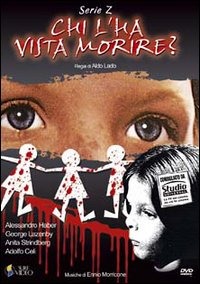
Who Saw Her Die?

With Daniel Craig established as a Bond to rival Sean Connery courtesy of 'Casino Royale', the only certainty nowadays in any poll is who would come bottom of the list: George Lazenby.

In all fairness, it's hardly his fault. A former male model, whose only previous acting experience had been a small role in the low budget spy spoof 'Espionage in Tangiers' - that the producers plucked him from nowhere and expected him to fill Connery's shoes was a spectacular bit of bad judgement, one compounded by further hamstringing him with a script as wet as an out-of-season weekend in Bognor Regis and pitifully lacking in the ruthless do-or-die ethos that characterises the best instalments of the franchise.

But I digress.

I have little interest in writing about 'On Her Majesty's Secret Service'; what is worth mentioning, however, is what George did next. He followed his solo Bond appearance with a lead role in Cy Endfield's largely forgotten mercenary drama 'Universal Soldier' (nothing to do with the Dolph Lundgren/Jean-Claude van Damme flick), after which he found himself negotiating the dank, dangerous, non-tourist-promoted backwaters of Venice in Aldo Lado's dark and compelling giallo 'Who Saw Her Die?'

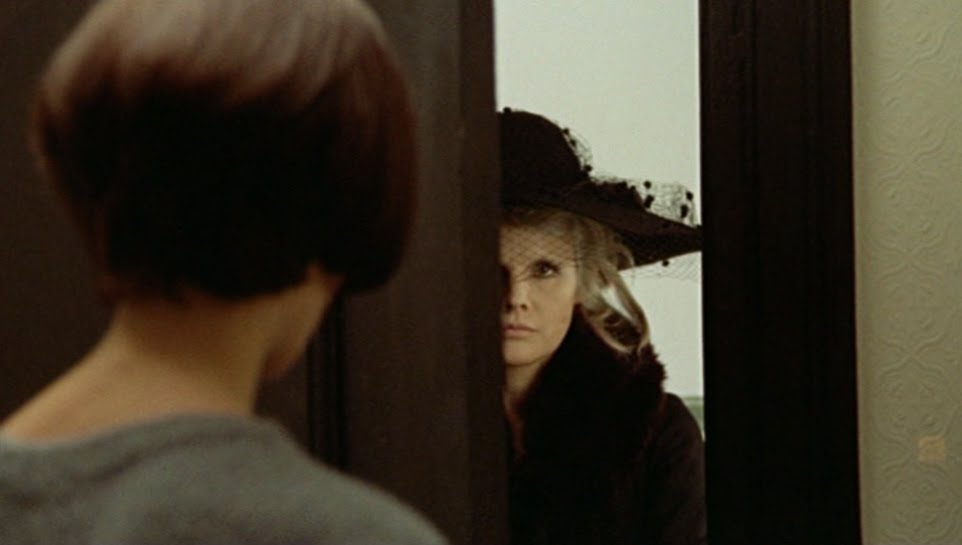
Lazenby plays Franco Serpieri, a sculptor living in Venice whose desultory affair with a local woman barely masks with pain of his estrangement from his wife Elizabeth (Anita Strindberg). Dishevelled, gaunt (Lazenby lost weight for the role), at odds with the cliquey society of art dealers and collectors, personified by his patron Serafian (Adolfo Celli - star of an earlier Bond film, 'Thunderball'), upon whom his livelihood depends, Serpieri's malaise is temporarily relieved by a visit from his vivacious young daughter Roberta (Nicoletta Elmi).

Temporarily, because red-headed Roberta falls foul of a black-gloved murderer a third of the way into the film and Serpieri, reconciled with Elizabeth through the harshest of tragedies, becomes obsessed with finding her killer.

At which point I need to stop talking about Lazenby. His physical transformation for the role is remarkable - coming a scant three years after 'OHMSS', he's almost unrecognisable: gone, the chiselled good looks that secured his erstwhile modelling profession, gone the coiffured, clean-shaven image; the Lazenby of 'Who Saw Her Die?' is an emaciated scruff of the first order - but his range as an actor is limited. Which is more than can be said for Strindberg. Often cast in gialli purely for her striking, high-cheek-boned looks, she has seldom been saddled with a more useless eye-candy/set-dressing/"woman in peril" role than here. (You can imagine Lado's direction: "Anita, look glacial ... Anita, look scared ... Anita, scream like you've never screamed before.")

I should mention instead Celli's effortless portrayal of Serafian as a sybarite/sensualist/degenerate (delete according to personal aesthetics), fine work from a wonderfully expressive actor who, in this film particularly, comes across as a Peter Ustinov gone bad. He's great; his scenes bootstrap the film up to a higher level.

But there's two people who really turn 'Who Saw Her Die?' into, if not a top-flight, then certainly an inspired giallo.

One is director Aldo Lado. Not just the only director, to the best of my knowledge, who first name and surname are an anagram of each other, he also worked as assistant director to Bertolucci on 'The Conformist'. Unjustly overlooked, Lado's contributions to the giallo are the equal of anything Bava achieved, and his capacity for spatial dislocation/disorientation and sustained setpieces (notably a tense cat-and-mouse sequence which takes in a fog-wreathed harbour and an abandoned factory) come close to the prowling, subjective camerawork of Argento at his best.

And speaking of those two maestros: remember Nicoletta Elmi, the creepy kid in Bava's 'A Bay of Blood' and the even creepier kid in Argento's 'Deep Red'? Here she plays a decidedly non-creepy kid. An actually quite adorable kid. Just eight years old when she starred in 'Who Saw Her Die?', Elmi acts everyone offscreen. The first act of the film, in which the killer makes two failed attempts at abducting Roberta before finally - fatally - succeeding, rises above the genre checklist it could easily have become. It's the doomed Roberta you remember more than the driven Serpieri. It's her terrible vulnerability, her achingly poignant innocence, than define the film, long after the shoal of red herrings have been forgotten and the almost awkwardly abrupt ending has ceased to bother the casual viewer.

Nicoletta Elmi has acted in only a handful of films and TV shows.An early, very small role, was in Visconti's masterpiece 'Death in Venice'; a decade and a half later, she proved the only good thing in Lamberto Bava's so-bad-it-was-almost-good-but-ultimately-was-just-plain-bloody-awful 'Demons'. In her mid-twenties, she turned her back on acting and studied medicine. A loss to cinema, but I applaud her humanity.

Rabu, 16 Januari 2008

Phenomena

Jennifer Corvino (Jennifer Connelly), the daughter of an eternally-absent movie star, is packed off to the prestigious Richard Wagner School for Girls in Switzerland, under the care of the equally musically named Frau Bruckner (Daria Nicolodi). The beheaded corpse of a Dutch tourist, Vera Brandt (Fiore Argento) has just been discovered, another victim in a spate of grisly murders. The school is abuzz with fear and intrigue. The girls are cliquey and snide. Jennifer is scorned for her perceived fame. The prissy headmistress (Dalila di Lazaro) takes against her from the start. She makes just two friends - room-mate Sophie (Federica Mastroianni) and, away from the school, entomologist Dr John MacGregor (Donald Pleasance).

She meets MacGregor after a sleepwalking incident. Lost and confused, miles from the school, she is rescued by MacGregor's assistant, Inga, who takes Jennifer to the wheelchair-bound scientist's home/laboratory. Oh, yeah, Inga's a chimpanzee, by the way. I am not making this up.

Jennifer and MacGregor hit it off immediately, bonding over their mutual love of insects. MacGregor studies them; his field is insect communication - he believes them to be telepaths. Jennifer proves his thesis and then some. Our girl actively empathises with them. A firefly leads her to an important discovery following Sophie's murder. A couple of million flies angrily descend upon the school when Jennifer is tormented by her classmates. The headmistress reveals herself as something of a religious fanatic. "Satan is sometimes referred to as Beelzebub," she muses; "the lord of the flies", and on this basis plans to have Jennifer bundled off to the nearest psychiatric hospital.

In the meantime, MacGregor has been helping Inspector Geiger (Patrick Bauchau) with his enquiries, studying the insects feeding off the recovered remains of Vera to pinpoint her time of death. This, and his burgeoning friendship with Jennifer, bring him to the killer's attention. The inevitable attack on him is witnessed by Inga who, unable to intercede, later finds the killer's discarded straight-razor and goes looking for revenge. Yes, that Inga. You know, the chimp.

Let me say it again: I am not making this up.

As you might have gathered, 'Phenomena' is ever so slightly bonkers. Although many of the director's fans rate it low in his filmography it is, in many ways, archetypally Argento. There's the wonky science from 'The Cat O'Nine Tails' and 'Four Flies on Grey Velvet'. There's the protagonist's visual impairment from 'TCONT': while Arno is blind and witness something only by overhearing it, Jennifer sleepwalks and witnesses a murder while not conscious. There's the telepathy subplot from 'Deep Red' that gets Helga killed in that film and Jennifer's life put at risk in 'Phenomena'. There's a pounding rock score that features compositions by former Goblin frontman Claudio Simonetti, as well as songs by Iron Maiden and Motorhead. There's plenty of prowling camerawork, editing that's as sharp as the aforementioned straight-razor, and a handful of scenes, particularly an extended finale, which are as tense and gloriously grand guignol as anything Argento has committed to film.

So why its reputation as second-rate Argento? The ludicrous plot probably has something to do with it ... but when has Argento ever been beholden to logic, narrative coherence or anything so conventional? Take 'Suspiria': it's an exercise in illogicality, but as a work of film art it's as gorgeous as it is demented.

No, I think 'Phenomena' suffers from the place it occupies in Argento's filmography. From 1975 to 1982, Argento was in his element: 'Deep Red', 'Suspiria', 'Inferno', 'Tenebrae', two deliriously over-the-top horror movies bookended by the two finest examples of the giallo in all of cinema. Compared to these, 'Phenomena' does, unfortunately, seem a little by-the-numbers. It doesn't even feature one of Argento's technical trademarks, like the two-and-a-half minute Louma crane sequence in 'Tenebrae' or the swooping ravens' POV shot in 'Opera', the film that followed 'Phenomena'.

It would be all to easy to make a case for Argento's career as a study in decline since 'Tenebrae'. But 'Phenomena' has its moments - along with a good performance, despite the often awful dialogue she's saddled with, by the young Jennifer Connelly (she was fifteen at the time and her star quality was already in evidence). Donald Pleasance gives sterling support in one of his better post-'Halloween' appearances. Argento's assistant director and protege Michele Soavi pops up in a supporting role as Inspector Geiger's assistant. And on the subject of the good detective, 'Phenomena' is that rarest of gialli: one that features a halfway competent copper, even though his complacency proves his undoing in the final reel.

Finally, 'Phenomena' has the most manic climax of any Argento movie. There's never been a deus ex machina like it!

Selasa, 15 Januari 2008

Deep Red

Whereas 'The Bird with the Crystal Plumage' and 'The Cat O'Nine Tails' are immediate in the instigation of their narratives (Sam Dalmas is walking home when he sees something; Franco Arno is walking home when he overhears something), 'Deep Red' sets out its stall in a more roudabout, even oblique, fashion. The first scene shows very little but is full of significance: we see a table set for dinner, a gramophone stand, a Christmas tree, an expanse of parquet flooring. A child's nursery rhyme plays liltingly on the soundtrack. In shadow, an indeterminate figure knifes another figure in the back. The bloody knife is thrown to the floor, suddenly occupying the screen in grotesque close-up. A pair of legs enter the composition, feet halting before the knife. Small feet. Those of a child.

The lilting song is replaced by Goblin's bass-heavy score ('Deep Red' marks Argento's first collaboration with the band; their music would become a mainstay of his films). The opening credits over, a POV shot takes us into a hall, heavy red curtains drawing back theatrically, where a conference on parapsychology is in progress. Psychiatrist Professor Giordani (Glauco Mauri) is interviewing a famous medium, Helga Ulmann (Macha Meril). Helga demonstrates her powers with a borderline parlour trick (correctly identifying an audience member she's never met) before jolting back in her seat, body wracked as if in agony. "I have contacted a twisted mind," she gasps. "You ... you have killed. And you will kill again." Another POV shot as the still anonymous newcomer to the conference just as quickly withdraws. Helga returns to her hotel room, keen to record her perceptions of this telepathic experience. Her few pages of notes are summarily removed after a shocking attack by a black-clad antagonist wielding a meat cleaver.

It is only now that, in true giallo fashion, our wrong-place-at-the-wrong-time hero happens along and witnesses the murder. Introduced a few minutes earlier rehearsing with his band and berating them for sounding "too clean, too formal ... this kind of jazz was born in brothels", Marc Daly (David Hemmings) is an English musician living in Rome. Walking home, he stops to chat with his friend Carlo (Gabrielle Lavia), a pianist-for-hire at a trendy bar. Marc remonstrates with Carlo about his drink problem and the way he squanders his talent. "You do it for the love of it," Carlo returns; "I do it for the money." This remark suggests that Marc occupies an ivory tower while Carlo lives in the real world. Seconds later, the real world (or at least Argento's hyper-stylised version of it) comes crashing into Marc's life as a scream rings out. Seconds after this, he sees Helga plunged face-first through a plate glass window.

By the time Marc gets to her apartment the killer has fled and it's too late. The police arrive, again adhering to giallo archetype: Superintendent Calcabrini (Eros Pagni) stuffs his face with sandwiches at the crime scene, demonstrates more interest in what instrument Marc plays than in generating lines of enquiry, and basically proves as much use as the proverbial chocolate teapot. Marc, meanwhile, fixates on the surreal paintings that line the walls of the hallway leading to Helga's apartment. Something bothers him; something he can't quite put his finger on.
.
Threatened by the killer, who plays the child's nursery rhyme outside Marc's apartment prior to warning him to leave Rome, Marc joins forces with flamboyant journalist Gianna Brezzi (Daria Nicolodi, making her first appearance in an Argento film) and they begin their own investigation. Marc buys a recording of the nursery rhyme and plays it to Giordani, who suggests it might be linked to a formative and probably traumatic event in the killer's childhood. Marc learns of a book detailing unsolved mysteries in which the nursery rhyme is mentioned. There is an illustration of an old house. Marc tears the illustration out of the book, and sets about tracking down the author, Amanda Righetti (Giuliana Calandra). The killer beats him to it. Frustrated, sickened at the brutality of Amanda's death, Marc overlooks a vital clue. Giordani, who visits the scene later, sees what Marc has missed. He returns to his office, confident that he knows the murderer's identity ...

Marc, meanwhile, locates the old house. He makes a couple of discoveries, but is coshed, left unconscious and wakes to find the place in flames. It seems like the killer has, once again, been one step ahead of him. Then he unearths a final clue which leads him to a confrontation in a deserted school ... but even then, there's something that doesn't add up. And there's one more nasty surprise lying in wait for him.

'Deep Red' meets all the criteria expected of a giallo. So what makes it transcend the sub-genre? Why is it arguably Argento's greatest achievement? Firstly, there's the script, which Argento co-wrote with Bernardino Zapponi (who worked with, among others, Fellini): crafty, clever, intricately structured, it leaves its greatest conceit - the transference of guilt from killer to protagonist - beautifully understated, assuming that the more the viewer thinks about the last-act revelation, and the motivations behind the murder and mayhem, the more apparent the supposed hero's complicity will become. That's all I'm saying on the subject, by the way; if you haven't seen the film yet, I don't want to deprive you of the jaw-dropping confidence which with Argento shows/conceals the murderer's identity quite early on. Structurally, the script offers a number of 'rhymed' scenes: incidental details and bits of throwaway dialogue which presage the mechanics of the various death scenes.

There's also the introduction, for the first time in Argento's filmography, of the supernatural, Helga's telepathy providing the impetus for the first murder. When Giordani introduces Helga, he talks of telepathy in the animal world, how a butterfly, in danger, will mentally communicate with others of its species, a mass of them responding. (This line finds its visual corrolary, only with flies instead of butterflies, in a key scene in 'Phenomena'.) Argento would go on to make two supernatural/horror films: 'Suspiria' and 'Inferno', the first two parts of his only-just-completed Three Mothers trilogy.

'Deep Red' brings the horror ethos to the fore, both in terms of elaborate, blood-soaked set-pieces (the title, 'Profondo Rosso' in its original Italian, is certainly apt) and the dark psychology behind them. I won't dwell on the latter for fear of giving too much away (suffice it to say that key themes here - duality and complicity - are taken to their logical extreme in the later 'Tenebrae'), so let's consider the former. The death scenes are bloodier and more violent than anything Argento had depicted before - something he would raise the bar on with (again) 'Tenebrae'. But there's more going on than just a B-movie guts 'n' gore exploitation workout. Argento raises the bar on tension, as well, particularly in Giordani's death scene, where he is menaced by an unseen assailant only for a rabbit-faced life-size mechanical doll to come hurtling into his office, maniacal giggling filling the soundtrack. Typing a description of this scene, I'm aware that it probably sounds ridiculous. Onscreen - take my word on this - it's fucking terrifying.

Just as creepy are the pre-murder scenes where the camera pans, in fetishistic close-up, across a collection of childhood mementos set against a backdrop of black velvet. Again, a simple description doesn't communicate much; but the combination of image, music and camera movement add up to one of the most effective head-fucks in cinema.

Argento's technical bravura is also evident during the wordless 15-minute sequence where Marc prowls the old house. With Goblin's soundtrack again providing aural assault, Argento's camera gets as much inside his protagonist's head as it does the empty rooms, dusty corridors and flooded basement of the house itself. The full extent of Marc's obsession is documented here.

Hemmings's performance, reminiscent of (as well as slyly satirising) his earlier work on Antonioni's 'Blow-Up', is one of his best. His scenes with Gianna work well, too, her supreme confidence an eternal threat to his painfully thin veneer of masculinity. Marc emerges as an often vulnerable but likeably tenacious character - multi-layered in a way that Sam Dalmas or Carlo Giordano aren't. And yet it's this tenacity that leaves him, in the film's powerful final image, looking back at his own image in a pool of blood, silently reckoning the cost of his obsession.


Minggu, 13 Januari 2008

The Cat O' Nine Tails

If it ain't broke, don't fix it. 'The Cat O'Nine Tails' opens in similar fashion to 'The Bird with the Crystal Plumage': Rome by night, a street scene; a man on his way home is an accidental witness to ...

Actually, no; scratch that. It becomes a very different film quite early on. One of the chief pleasures of 'TCONT' is Argento's first-act manipulation of accepted giallo conventions. To begin with, our protagonist Franco Arno (Karl Malden) doesn't technically witness anything since he's blind. Secondly, what he stumbles on (a few words of overheard conversation) is indicative of blackmail, not murder. Thirdly, he's revealed, a few minutes later, as not even being the protagonist but a supporting character. Here's our hero of the day, another example of Argento's blandly interchangeable leading men: Carlo Giordano (James Franciscus), an investigative journalist hurrying to the scene of a break-in at the Terzi Institute, a renowned genetics research facility. En route, he bumps into Franco (quite literally); the two quickly join forces as blackmail and burglary leads to multiple murder and everyone at the institute seems to have a secret to hide.

There's institute head honcho Professor Terzi (Tino Carraro), whose interest in his adoptive daughter Anna (Catherine Spaak) is rather unwholesome; there's narcissistic German researcher Dr Braun (Horst Frank), leading a double life that leaves him open to personal as well as professional jealousies; there's Dr Calabresi (Carlo Aleghiero), who fatally discovers something about one of his colleagues ... fatally for him, that is; there's Calabresi's lover, Bianca Merusi (Rada Rassimov), who races to find the incriminating evidence before the killer can find her; there's Dr Casoni (Aldo Reggiani), whose work on the XYY project constitutes one discovery too many.

The XYY project, the Macguffin around which the narrative centres, explores the idea that criminal tendencies are genetically pre-programmed. Casoni enthuses that, once the research has been completed, a simple test at birth, followed by immediate incarceration of all carriers, will effectively stamp out crime and violence. It's a startling concept: a future in which the state whisks babies from womb to prison to guard against what they might do later in life. It's also a highly dubious bit of science, which is probably why the script doesn't explore it any further. Although, as with the later 'Deep Red', there's a brutal irony lurking at the end of the film once you think about it a bit.

It's curious that 'TCONT' remains so under-rated. Read the user comments on IMDB and the general concensus seems to be that it's lacking in Argento's trademark bravura visuals and camerawork ... but you could say that of 'TBWTCP'. In fact, Argento's operatic visual excesses didn't fully kick in until 'Deep Red'. True, there's nothing in 'TCONT' quite as striking as Sam Dalmas trapped between the two sets of glass doors at the start of 'TBWTCP', but there are still some great set-pieces: a murder at a railway station, a bunch of paparazzi distracted from the arrival of a pouting starlet as someone is pushed in front of an oncoming train (the face/front of locomotive impact is not so much homaged in Eli Roth's 'Hostel' as shamelessly plagiarised); a Hitchcockian bit of suspense involving a poisoned carton of milk (a sly reworking of a terrific sequence in 'Notorious'); a bit of business in a shadowy crypt that segues from blackly comic to just plain creepy; a roof-top confrontation/chase scene in which Franco proves himself more than capable despite his blindness.

There are also flaws, however: far too many scenes with the typically ineffectual cop, Superintendent Spini (Pier Paolo Capponi); a pointless romantic subplot between Carlo and Anna (Franciscus and Spaak pitch their performances at a narcoleptic level; there is absolutely no chemistry; their love scene is embarrassing); perfunctory and fairly ordinary death sences; way too many red-herrings (granted, a certain amount of misdirection is requisite in the giallo, but here there are too many instances when the actual plot is all but forgotten about); and a title that's as tenuous as the science is shaky. Discussing the various institute staff whose behaviour prompts suspicion, Franco and Carlo come up with nine names. "Like a cat o' nine tails," Carlo exclaims. "Yes, the old navy whip," Franco nods. "If we could just grasp one of them ..." Carlo muses.

And yet 'TCONT' is an intriguing and often entertaining film to watch. It also benefits from arguably the greatest acting performance in any Argento film: that of Karl Malden. I don't think I've ever seen a mainstream actor play a blind man so convincingly, so physically and with such dignity. Forget Al Pacino's inexplicably Oscar-rewarded turn in 'Scent of a Woman', Malden truly integrates with his character.